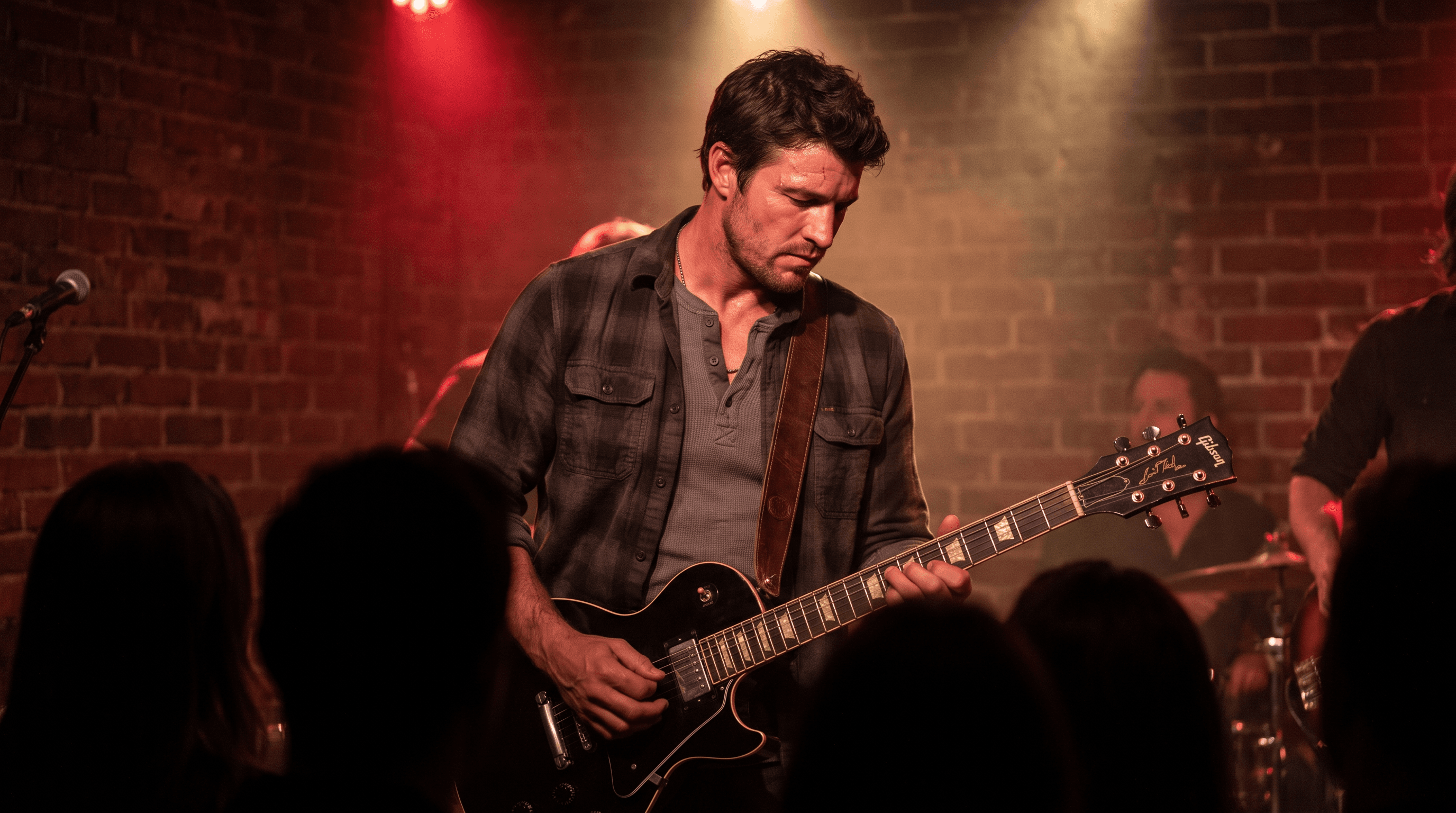
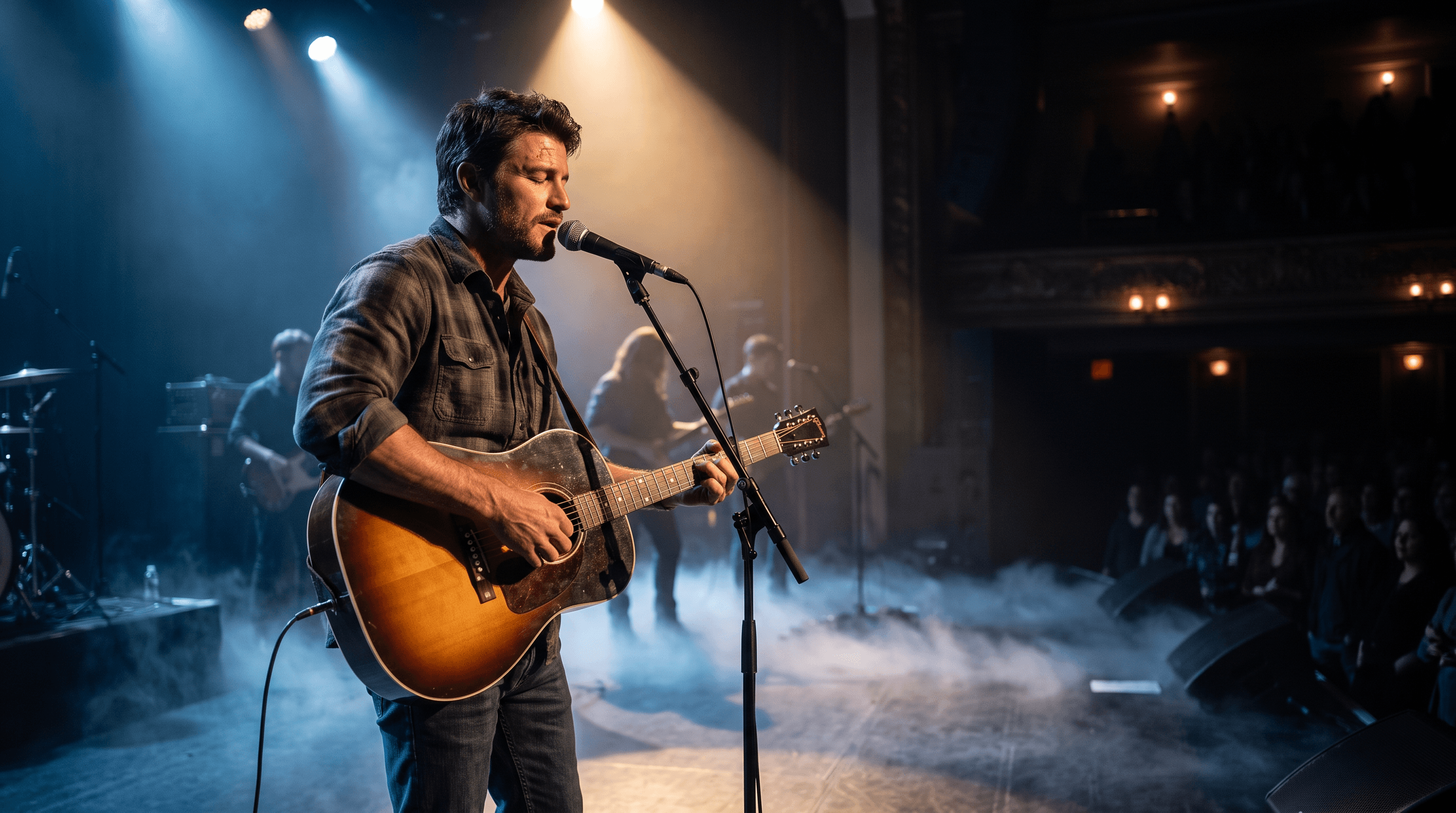
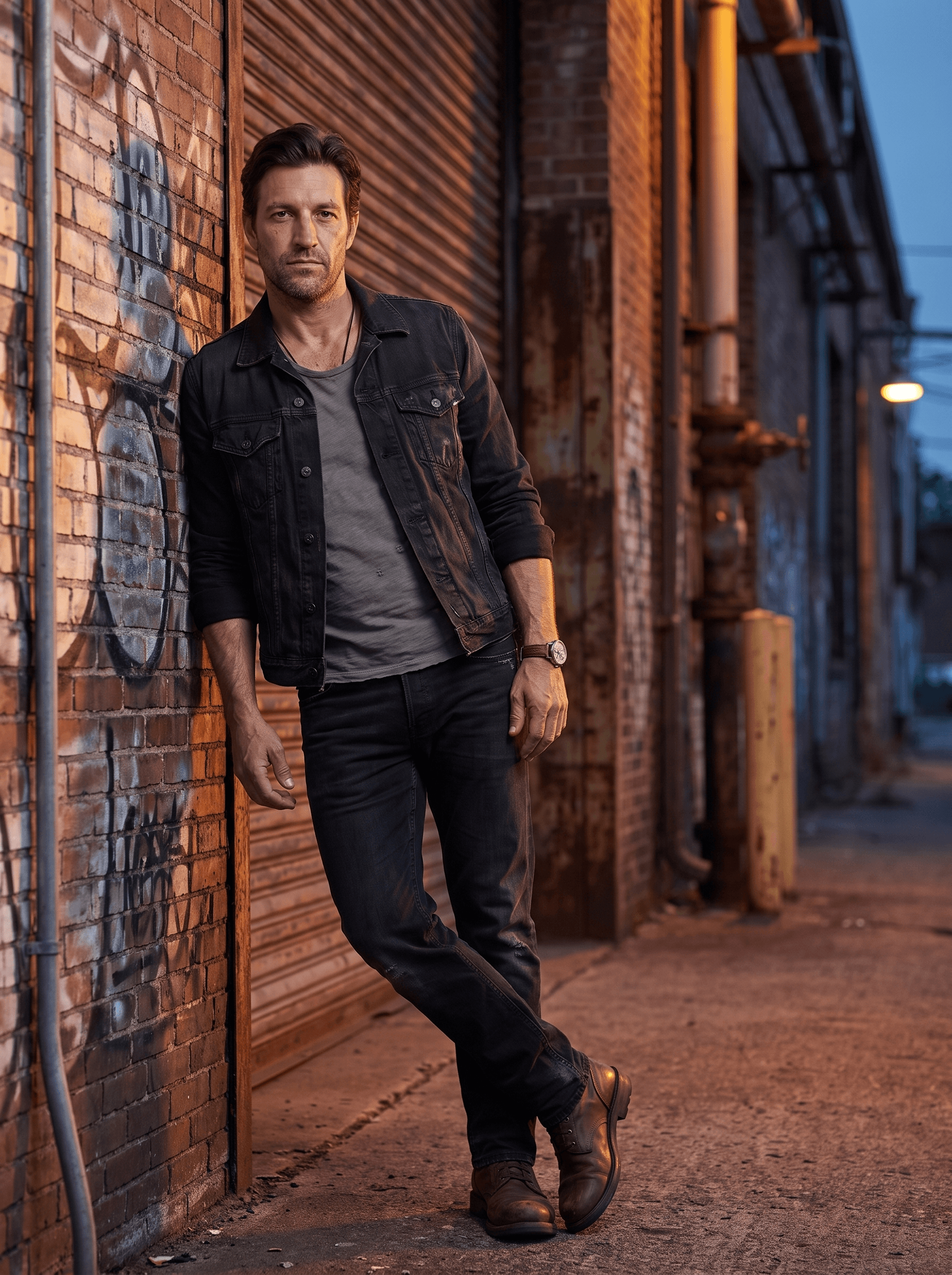
Ellis Rourke writes like someone who learned melody from ore boats and winter radio: long phrases, few wasted words, a baritone that sits in the chest instead of climbing for cheap lift. Raised on Duluth’s hillside streets, he spent late teens hauling gear through lake-effect snow for bar bands that never left the county, then stripped the lineup down to what he could carry—thick dropped-D guitars, a dry snare, and hooks that refuse major-key consolation. His songs live in the midtempo pocket: not ballad-slow, not radio-sprint, just the gait of a truck on I-35 after midnight. Post-grunge and modern alternative are the frame, not the costume; he borrows the weight of ’90s rock without the arena cheese, favoring minor-key tension, restrained distortion, and choruses that feel earned rather than engineered. Artistic philosophy is simple and stubborn: if it doesn’t sound true in a cold room with the amps at three, it doesn’t ship. Ellis treats the Great Lakes as both weather and metaphor—pressure systems, long horizons, grit that doesn’t announce itself. He is building a catalog for listeners who still want rock that occupies space, not spectacle.
Music
New music coming soon
Meet Ellis Rourke
“Great Lakes grit in a dropped-D pocket.”
Ellis Rourke writes like someone who learned melody from ore boats and winter radio: long phrases, few wasted words, a baritone that sits in the chest instead of climbing for cheap lift. Raised on Duluth’s hillside streets, he spent late teens hauling gear through lake-effect snow for bar bands that never left the county, then stripped the lineup down to what he could carry—thick dropped-D guitars, a dry snare, and hooks that refuse major-key consolation. His songs live in the midtempo pocket: not ballad-slow, not radio-sprint, just the gait of a truck on I-35 after midnight. Post-grunge and modern alternative are the frame, not the costume; he borrows the weight of ’90s rock without the arena cheese, favoring minor-key tension, restrained distortion, and choruses that feel earned rather than engineered. Artistic philosophy is simple and stubborn: if it doesn’t sound true in a cold room with the amps at three, it doesn’t ship. Ellis treats the Great Lakes as both weather and metaphor—pressure systems, long horizons, grit that doesn’t announce itself. He is building a catalog for listeners who still want rock that occupies space, not spectacle.
Live Performances